We use cookies to improve our site and your experience. By continuing to browse our site you accept our cookie policy
We use cookies to improve our site and your experience. By continuing to browse our site you accept our cookie policy
 20.10.2026
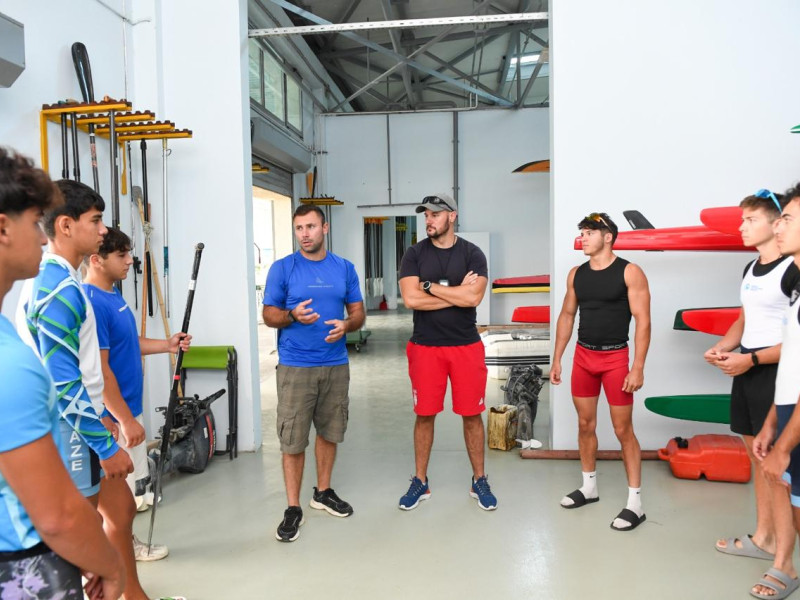
Young athletes from Azerbaijan and Czechia benefited from a dedicated technical training programme in Mingachevir, combining expert coaching, performance analysis and international competitio
Paddle Europe continued its investment in the development of canoeing across the continent with a Canoe Sprint Training Camp held in Mingachevir, Azerbaijan, from 26 September to 1 October 2026.
The initiative brought together promising young athletes for an intensive programme designed to improve technical skills, strengthen racing preparation and support their long-term progression towards higher levels of international competition.
Led by Serbian coach Uros Pavlovic, the training camp formed part of Paddle Europe's commitment to creating development opportunities for athletes and supporting the growth of Canoe Sprint in European nations.
The programme combined three days of targeted training with participation in the Mingachevir International Regatta, giving athletes the opportunity to put their newly developed skills into practice in a competitive international environment.
Investing in athletes and building future potential
Eight Azerbaijani athletes participated in the programme, representing both kayak and canoe disciplines. They were joined during the second and third training days by four athletes from Czechia, adding an international dimension to the sessions.
Working alongside Pavlovic was Azerbaijani national team coach Nazim Javadov, ensuring close cooperation between the visiting expert and the local coaching structure.
This collaboration represented an important element of the initiative, extending its value beyond the participating athletes by encouraging the exchange of technical knowledge, coaching approaches and training methodologies.
For Paddle Europe, initiatives of this nature reflect the importance of investing directly in athlete development, particularly by providing access to specialist coaching, technical expertise and international competition experience.
Rather than focusing exclusively on immediate results, the programme aimed to establish foundations for sustainable sporting progress, helping young athletes identify areas for improvement and develop the technical and tactical skills required to compete at higher levels.
Technical development at the heart of the programme
The training sessions focused on several essential aspects of Canoe Sprint performance, including paddling technique, boat positioning, equipment adjustments, speed, endurance and race tactics.
Video analysis was used to identify technical details requiring correction, with particular attention given to posture, paddle entry, leg-drive coordination and the efficiency of each stroke.
Athletes also received individual guidance on equipment configuration, including seat positioning and paddle adjustments, recognising the importance of optimising the relationship between athlete, equipment and performance.
The practical programme included short sprint efforts, 300-metre speed-endurance intervals and race simulations over 500 and 1000 metres, allowing coaches to assess technical consistency under different levels of physical intensity.
Additional gym-based exercises focused on improving stroke mechanics and strengthening the muscle groups involved in paddling.
For canoe athletes, particular emphasis was placed on stroke rhythm, power generation and reach.
Despite the limited duration of the training period, the combination of technical correction, physical preparation and tactical instruction provided an intensive learning environment adapted to the athletes' immediate needs.
International competition puts progress to the test
Following the training sessions, the athletes participated in the Mingachevir 2026 International Regatta, which brought together competitors from 12 countries: Azerbaijan, Czechia, Turkey, Latvia, Lithuania, Georgia, Hungary, Moldova, Ukraine, Uzbekistan, Tajikistan and Kyrgyzstan.
The competition was staged across two venues, with the opening 200-metre races held in Fuzuli, followed by the 500-metre and 1000-metre events in Mingachevir.
The event provided a valuable opportunity for the athletes to experience international racing conditions while receiving continued technical and tactical guidance from the coaching team.
Several participants achieved notable results across the different age categories.
Alimurad Hajizada was among the standout performers, securing victories in the K1 200m, 500m and 1000m events in his respective age categories.
Mustafa Valizada also claimed gold in the K1 500m, while Azerbaijani crews achieved victories in K2 events over 200m and 500m.
In canoe, Huseyn Samadli collected bronze medals in the C1 200m, 500m and 1000m, demonstrating consistency across all three distances.
Beyond the medal-winning performances, the regatta served as an essential extension of the development programme.
Coaches worked closely with the athletes on race preparation, warm-up routines and tactical decisions, while post-race discussions provided immediate feedback on performances and areas requiring further improvement.
Promising signs for the next generation
In his final assessment, coach Uros Pavlovic highlighted the considerable development potential demonstrated by the participating athletes, particularly among younger competitors born in 2009 and 2011.
The training camp also provided useful information to guide future coaching decisions and identify priorities for the athletes' next stages of development.
Although the programme was relatively short, its objectives were largely achieved, with positive feedback on the athletes' technical progress, competition performances and commitment throughout the activities.
Development as a long-term investment
This Training Camp illustrates the role that targeted development initiatives can play in strengthening Canoe Sprint across Europe.
By connecting experienced coaches with emerging athletes and national coaching structures, Paddle Europe seeks to contribute to a broader and more competitive sporting environment, where access to expertise and development opportunities can help unlock potential.
Supporting the next generation of athletes requires more than organising competitions. It also means investing in the preparation, education and technical foundations that allow young paddlers to progress.


© 2021 ECA