We use cookies to improve our site and your experience. By continuing to browse our site you accept our cookie policy
We use cookies to improve our site and your experience. By continuing to browse our site you accept our cookie policy
 26.7.2026
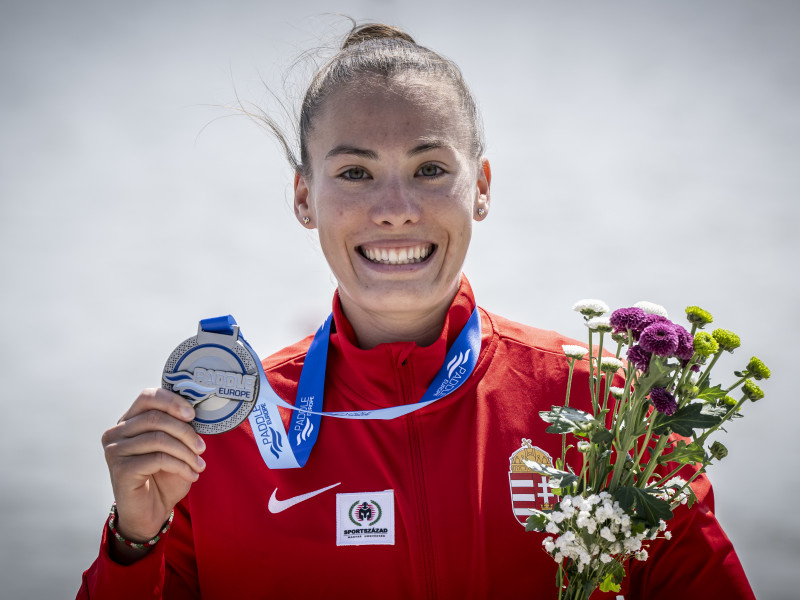
The 2026 Paddle Europe Junior and Under 23 Sprint Championships concluded on Sunday following a packed final program at the Maty-ér Regatta Course in Szeged, Hungary.
After the first ten European titles were awarded over 1000 meters on Saturday, the remaining 32 champions were crowned across the 500 and 200 meters distances, the K4 events and the mixed C4 races.
Host nation Hungary delivered an outstanding final day, adding eight titles to finish at the top of the official National Federation medal table with 11 gold, ten silver and four bronze medals.
Czechia finished second with four gold, four silver and three bronze medals. Ukraine took third place with two gold and four silver, ahead of Germany, which also won two titles and completed the championships with nine medals. Serbia finished fifth after winning two gold medals on Sunday.
Bálint Kollek gave Hungary the perfect start to Sunday’s Final A programme by successfully defending his title in the K1 Under 23 Men 500 metres.
Kollek completed the race in 1:48.368, finishing ahead of Dmitrii Avdeev of AIN-A and Germany’s Lucas Kluge.
Ivan Nekrasov of AIN-A followed the European Best Time and K1 Junior Men 1000-metre victory he achieved on Saturday with another gold medal over 500 metres. Germany’s Tymofii Zherebylo took silver, while Türkiye’s Rahmi Karahan collected bronze.
Karahan completed a remarkable individual campaign in Szeged by winning bronze in all three Junior Men’s K1 distances: 1000, 500 and 200 metres.
One of the biggest stories of the final day came in the K1 Junior Women 500 metres, where Serbia’s Zsofi Horvat claimed the European title.
Horvat finished ahead of Italy’s Anastasia Insabella and Czechia’s Barbora Janotová in one of the most competitive events on the programme.
It was only Serbia’s second Junior Women’s European title in the K1 500 metres. The country’s previous victory came nine years earlier, when Marija Dostanic won on home water at the 2017 European Championships in Belgrade.
Serbia later celebrated another title through Strahinja Dragosavljevic, who won the K1 Under 23 Men 200 metres ahead of Ukraine’s Oleksandr Hartsev and Aleksandr Rozov of AIN-A.
With two gold medals from two podium appearances, Serbia finished fifth in the final medal table.
Moldova also produced an important historical result through Lev Lunin and Maxim Rogut in the K2 Junior Men 500 metres.
The Moldovan crew secured the bronze medal behind the winning AIN-B boat of Artsiom Vaitseshyn and Heorhi Varazhun and Hungary’s silver medallists Armin Palinkas and Hunor Mayer.
It was Moldova’s first medal in the Junior Men’s K2 500 metres.
The country’s only previous medal in a Junior Men’s K2 event had come 21 years earlier, when Andrei Gotco and Vitalii Iurcenco won silver in the K2 1000 metres at the 2005 European Championships in Plovdiv, Bulgaria.
Moldova completed the championships with three bronze medals. Mihai Chihaia contributed the other two by finishing third in the C1 Under 23 Men 1000 and 200 metres.
Czechia’s Ondrej Prochazka was one of the leading performers of the final day, winning both individual Junior Men’s canoe titles.
He first claimed the C1 Junior Men 500-metre gold in 2:00.359, finishing ahead of Hungary’s David Barna and Aleksandr Mineev of AIN-A.
Prochazka returned later in the afternoon to win the C1 Junior Men 200 metres in 43.333 seconds. Hungary’s Adam Molnar took silver, while Spain’s Anton Lagares completed the podium.
Those two victories helped Czechia finish second in the overall National Federation medal table and second in the Junior ranking, with three gold, three silver and two bronze medals.
Poland secured its only gold medal of the championships through Zofia Wieclawska in the K1 Under 23 Women 500 metres.
Wieclawska won an exceptionally close race in 2:07.512, finishing only 0.040 seconds ahead of Hungary’s Sara Fojt. Alesia Shubouskaya of AIN-B crossed the line a further 0.100 seconds behind the winner.
Poland ended the championships with seven medals and placed second in the Under 23 ranking with one gold, four silver and one bronze.
Ukraine collected two titles during the afternoon’s 200-metre programme.
Ivanna Dyachenko won the K1 Under 23 Women 200 metres ahead of Poland’s Dominika Zimnoch and Maryia Misiuchenka of AIN-B.
Anna Yurieva took the K1 Junior Women title, with Hungary’s Lara Bebok winning silver and Czechia’s Barbora Janotová collecting bronze.
Ukraine concluded the championships in third place overall with two gold and four silver medals.
Hungary’s depth was particularly evident in the crew boat events.
Bianka Hofer and Vivien Lesko won the K2 Junior Women 500 metres, finishing ahead of Yuliya Khodzka and Marharyta Mekh of AIN-B and the Italian combination of Anastasia Insabella and Sofia Crivici.
The strongest Hungarian performance came during the concluding K4 block, where the host nation completed a clean sweep of all four European titles.
Zalan Varga, Levente Gyarmati, Zarand Lanczi and Kristof Uram won the K4 Junior Men 500 metres, while Bálint Kollek, Mate Juhasz, Tamas Avar and Adam Kaed secured the Under 23 Men’s title.
Panni Kadler, Helka Nemeth, Lili Gazdag and Nora Kalmar became the Junior Women’s champions. Sara Fojt, Flora Tolgyesi, Aliz Gombas and Hanna Peto completed the sweep by winning the K4 Under 23 Women race.
Germany won the Junior mixed C4 title through Jonas Prehl, Makar Pron, Mera Klapheck and Lia Marder.
Hungary then ended the championships with one final victory. Iringo Batka, Milan Meszaros, Iliasz Mitropoulos and Imola Batka won the C4 Under 23 Mixed 500 metres ahead of Spain and Poland.
Although AIN-A and AIN-B are not included in the official National Federation medal table, their athletes produced one of the strongest collective performances of the championships.
Across the 42 medal events, the two delegations combined for 42 medals: 20 gold, ten silver and 12 bronze.
AIN-B collected 24 medals, comprising 13 gold, seven silver and four bronze. This gave AIN-B more victories than any individual National Federation, including Hungary, which finished with 11 gold medals.
AIN-A added 18 podium finishes, with seven gold, three silver and eight bronze medals.
Taken together, the two AIN delegations won 20 of the 42 titles available and collected considerably more medals than any individual National Federation. However, as they competed as separate AIN delegations and not as recognised National Federations, their results are excluded from the official country rankings.
Several AIN athletes completed highly successful individual championships. Ivan Nekrasov won both the K1 Junior Men 1000 and 500 metres, setting a European Best Time in the longer distance.
Palina Sobal completed a double in the C1 Junior Women 500 and 200 metres, while Anhelina Bardanouskaya was part of three winning performances across the C1 and C2 Under 23 Women events.
AIN-B also dominated several crew boat races, winning the K2 and C2 Junior Men 500 metres, the K2 Under 23 Men 500 metres and the C2 Under 23 Women 500 and 200-metre events.
Hungary topped the final National Federation medal table with 25 medals: 11 gold, ten silver and four bronze.
Czechia finished second with four gold, four silver and three bronze medals, while Ukraine placed third due to its four silver medals. Germany also won two gold medals and finished fourth with a total of nine podium appearances.
Poland collected seven medals, Spain eight and Italy four. Türkiye concluded the championships with one silver and three bronze medals, while Moldova’s three podium finishes were all bronze.
| Rank | Nation | Gold | Silver | Bronze | Total |
|---|---|---|---|---|---|
| 1 | Hungary | 11 | 10 | 4 | 25 |
| 2 | Czechia | 4 | 4 | 3 | 11 |
| 3 | Ukraine | 2 | 4 | 0 | 6 |
| 4 | Germany | 2 | 3 | 4 | 9 |
| 5 | Serbia | 2 | 0 | 0 | 2 |
| 6 | Poland | 1 | 5 | 1 | 7 |
| 7 | Spain | 0 | 2 | 6 | 8 |
| 8 | Italy | 0 | 2 | 2 | 4 |
| 9 | Türkiye | 0 | 1 | 3 | 4 |
| 10 | Azerbaijan | 0 | 1 | 0 | 1 |
| 11 | Moldova | 0 | 0 | 3 | 3 |
| 12 | Great Britain | 0 | 0 | 2 | 2 |
| 13 | Estonia | 0 | 0 | 1 | 1 |
| 13 | France | 0 | 0 | 1 | 1 |
Hungary also led both age-group rankings. The host nation collected four gold, seven silver and one bronze medal in the Junior category, before adding seven gold, three silver and three bronze medals in the Under 23 events.
After four days of racing and 42 European title events, the 2026 Paddle Europe Junior and Under 23 Sprint Championships ended with Hungary at the top of the official medal table, several historic achievements for Europe’s National Federations and an exceptional collective performance from the AIN athletes.


© 2021 ECA