We use cookies to improve our site and your experience. By continuing to browse our site you accept our cookie policy
We use cookies to improve our site and your experience. By continuing to browse our site you accept our cookie policy
 23.9.2026
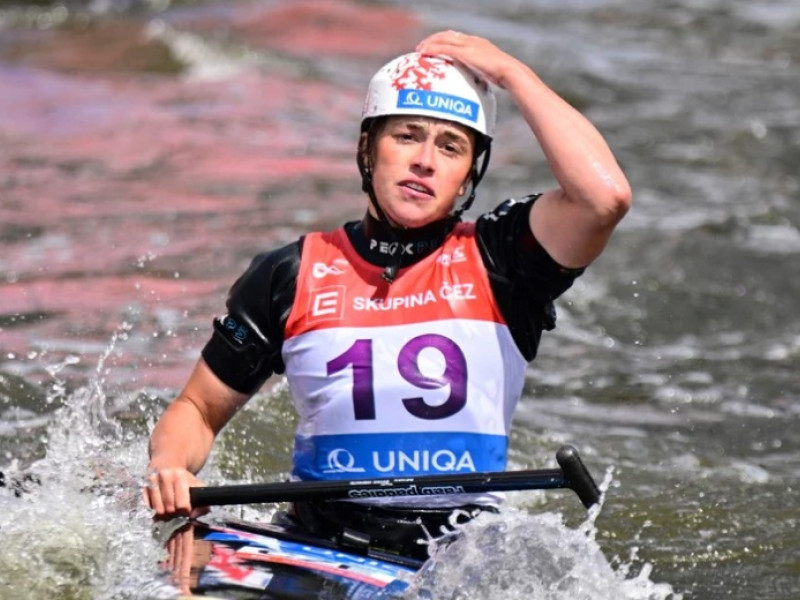
Ivrea now brings together two sides of that story: established champions such as Jiri Prskavec and a new generation led by newly crowned world champion Jakub Krejci.
The strongest recent Czech sequence has come in men’s K1. From 2020 to 2025, Czech paddlers won five of the six European titles.
Jiri Prskavec was champion in 2020, 2022, 2023 and 2025, while Vit Prindis won the title in Ivrea in 2021. The only interruption came in 2024, when Italy’s Giovanni De Gennaro became European champion in Tacen.
That record means Prskavec arrives in Ivrea as the defending European champion and with four European individual K1 titles from the last six editions.
He will race alongside Jakub Krejci and Matyas Novak in a Czech men’s kayak team that combines experience with one of the biggest breakthroughs of the 2026 season. The current Ivrea start list confirms Krejci, Prskavec and Novak as the Czech trio for the men’s K1 team event.
If Prskavec represents Czechia’s established dominance, Jakub Krejci represents its next chapter.
At the 2026 World Championships in Oklahoma City, Krejci became men’s K1 world champion, finishing ahead of Poland’s Michal Pasiut and Italy’s Olympic champion Giovanni De Gennaro.
The result immediately changed the balance inside the Czech team.
Prskavec arrives as the defending European champion, while Krejci arrives as the reigning world champion.
Few national teams can place those two titles side by side in the same discipline.
For Czechia, it also suggests that the transition between generations is already happening without a significant loss of competitiveness.
Czech success in men’s kayak has not been limited to individual competition.
In the men’s K1 team event, Czechia won the European title in 2021, 2022 and 2024. Across the six editions from 2020 to 2025, the country reached the podium four times and won three gold medals.
The 2025 European Championships produced a more difficult result, with the Czech team finishing eighth after four penalty seconds, but the line-up already included Prskavec and Krejci.
They return in Ivrea with Novak completing the trio.
That gives Czechia another opportunity to combine one of the sport’s most experienced champions with the current world champion.
There is another Czech sequence that could become even more significant during the opening day in Ivrea.
The Czech women’s C1 team has won the last three European titles, taking gold in 2023, 2024 and 2025. Czechia also won this event in 2020, giving the country four titles in the six European Championships between 2020 and 2025.
In 2025, Gabriela Satkova, Martina Satkova and Adriana Morenova took victory ahead of France and Italy.
The names will change in Ivrea, but the objective remains the same: a fourth consecutive European team title.
And the Czech women arrive with another major reason for confidence.
Tereza Kneblova comes to Ivrea as the reigning women’s C1 world champion. Her victory at the 2026 World Championships placed her ahead of Monica Doria and Klaudia Zwolinska, both of whom are also entered in Ivrea.
Her presence gives Czechia a second reigning individual world champion at these championships, alongside Krejci. That combination underlines how broad the Czech challenge has become. The team is no longer built only around one established name or one historically strong category. It now includes major international champions across both men’s kayak and women’s canoe.
The venue itself is also part of Czech slalom history. When the European Championships were last held here in 2021, Vit Prindis won the men’s K1 title. De Gennaro finished second and Peter Kauzer third.
Five years later, Prindis is no longer part of the Czech Ivrea line-up, but the country returns with Prskavec and Krejci carrying a different combination of European and World Championship titles. The names have evolved. The expectations have not.
Recent Czech success in canoe slalom has been built across several generations. Prindis won here in Ivrea in 2021. Prskavec has dominated much of the recent European men’s K1 history. Krejci now arrives as world champion.
In women’s C1, Czechia has created a three-year winning streak in the team event while Kneblova has reached the top of the world individually.
Ivrea 2026 therefore offers Czechia more than the chance to defend titles.
It offers another test of whether one of Europe’s strongest recent slalom programmes can continue turning established success into a new generation of champions.


© 2021 ECA