We use cookies to improve our site and your experience. By continuing to browse our site you accept our cookie policy
We use cookies to improve our site and your experience. By continuing to browse our site you accept our cookie policy
 3.11.2026
Fourteen European Championships, 11 venues, 42 days of competition and more than 3,000 different athletes. From extraordinary individual achievements to historic breakthroughs and closely contested national rivalries, 2026 was a remarkable year for Paddle Europe.
Four races. Four victories. Four European titles.
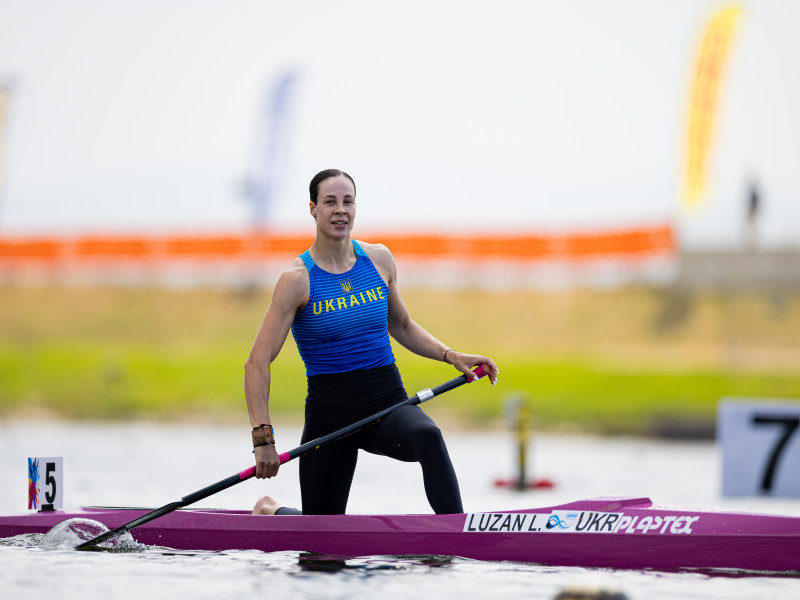
In Montemor-o-Velho, Ukraine's Liudmyla Luzan delivered one of the most extraordinary performances of the 2026 European Championship season, winning every event she entered and leaving Portugal with four gold medals.
At the same venue, Great Britain's Charlotte Henshaw produced another memorable display, winning two European Paracanoe titles on the same day, while Portuguese favourite Norberto Mourão celebrated a dramatic victory in front of his home crowd.
In Scotland, France's Dimitri Tostain collected five European titles at a single Wildwater championship. In Épinal, a 17-year-old Czech slalom athlete won six medals. And in Greece, an Italian SUP competitor completed a clean sweep of the three Open women's titles.
Others travelled between European Championships, switching distances, boats and even disciplines while continuing to reach the podium.
Their achievements helped define a season that brought together more than 3,000 different athletes, 264 European titles and 42 days of competition across the continent, showcasing the extraordinary diversity and strength of European paddlesports.
Fourteen championships and 42 days of competition across Europe
From the whitewater of Finland and Scotland to the Atlantic coast of France, the flatwater venues of Portugal and Hungary, and the Mediterranean waters of Greece, the 2026 European Championship calendar offered a remarkable variety of competitive challenges.
Paddle Europe staged 14 European Championships across 11 venues, delivering a combined 42 days of competition between June and October. Each day of competition at a different venue was counted separately, even when events took place simultaneously in different countries.
The season began in Lieksa, Finland, with Freestyle, while Montemor-o-Velho in Portugal hosted the Senior Sprint, Paracanoe and Sprint Masters European Championships.
For the first time, the Sprint Masters European Championships were staged alongside the Senior Sprint and Paracanoe European Championships in Montemor-o-Velho. Bringing these competitions together proved a very positive experience, with elite athletes and experienced Masters paddlers sharing the atmosphere of the same major European event.
More than a successful first edition, the format brought different generations and levels of participation closer together, showing how European championships can celebrate sporting excellence while strengthening lifelong involvement in paddlesports. It also offered an encouraging model for the future development of the sport.
Romania welcomed Canoe Marathon and Masters competition in Bascov-Pitești. July also brought Slalom Masters to St. Ruprecht in Austria and Junior and U23 Sprint to Szeged in Hungary.
In August, Épinal hosted Europe's Junior and U23 Slalom Championships, followed by the Junior and U23 Wildwater Championships in Grandtully, Scotland, and Ocean Racing in Brest, France.
September took European SUP competition to Agios Nikolaos in Greece and brought the Senior Slalom Championships to Ivrea, Italy.
The season concluded in October at Milan's Idroscalo, where the European Canoe Polo Club Championships crowned the continent's leading club teams.
Across the championships outside the Canoe Polo club competition, 3,035 different athletes took part, including 1,986 men and 1,049 women.
Women represented 34.6% of the athletes, reflecting their important contribution across the different disciplines and age groups.
As many athletes appeared at more than one championship, the calendar generated 3,279 championship participations, with 235 athletes competing in two or more European Championships.
The European Canoe Polo Club Championships added another 302 registered players, bringing the combined season figure to 3,581 championship participations and club registrations.
In all, 43 national and independent delegations were represented, illustrating the geographical reach of Paddle Europe.
Beyond these figures lies a sporting community extending far beyond the Olympic programme, encompassing different environments, racing formats and generations.
Liudmyla Luzan's four golden races in Montemor
Among the individual achievements of the year, Liudmyla Luzan's performance in Portugal deserves a special place.
The Ukrainian canoeist arrived at the European Sprint Championships as one of the sport's leading athletes and produced a perfect campaign.
She claimed the women's C1 200m European title in 43.710 seconds, establishing a new European Best Time.
Alongside Anastasiia Rybachok, she then won the women's C2 200m event.
The longer distance brought more success. Luzan added the C1 500m title before returning to the water with Rybachok to secure gold in the C2 500m.
Four European titles from four events, combining individual dominance with exceptional crew racing.
Her achievements were particularly impressive in a championship that brought together some of the world's strongest women's canoe paddlers.
Luzan's performances also ensured that Ukraine's four Sprint gold medals all featured the same athlete, an extraordinary contribution to her national team's success.
Montemor produced several other memorable moments, including the men's K1 5000m contest between Portugal's Fernando Pimenta and Denmark's Mads Pedersen, decided by less than one second.
For Pedersen, however, that narrow defeat would become only one chapter in a European season that still had more success in store.
British dominance and an emotional Portuguese victory in Paracanoe
Montemor-o-Velho also provided the stage for some of the season's finest Paracanoe performances, bringing together 103 athletes and offering another demonstration of the extraordinary quality of European competition.
Great Britain's Charlotte Henshaw was one of the outstanding figures, winning two European titles on the same day.
In the women's VL3 200m, Henshaw defeated teammate and defending European champion Hope Gordon by just 0.155 seconds, establishing a new European Best Time of 53.492 seconds.
The result reversed their positions from the previous European Championships in Račice, adding another chapter to one of the most compelling rivalries in women's Paracanoe.
Later that afternoon, Henshaw returned to the water and claimed a second gold medal in the women's KL2 200m, this time finishing ahead of another British Paralympic champion, Emma Wiggs.
The strength of Great Britain's team extended well beyond Henshaw's two victories.
Gordon recovered from her narrow VL3 defeat to win the women's KL3 title, while Wiggs celebrated her return from injury by claiming the women's VL2 crown.
David Phillipson added another victory in the men's KL2, helping Great Britain finish the Paracanoe Championships with five gold medals and three silvers.
Yet one of the most emotional moments belonged to the host nation.
Portugal's Norberto Mourão delighted the home crowd by defending his men's VL2 European title in a dramatic final against Spain's Higinio Rivero.
Just 0.10 seconds separated the two athletes, with Mourão crossing the finish line in 52.242 seconds and establishing a new European Best Time, improving a mark that had stood for a decade.
Ukraine's Vladyslav Yepifanov also successfully defended his men's VL3 title, overcoming Great Britain's Stuart Wood by an even smaller margin of 0.090 seconds.
From Henshaw's golden double to Mourão's home triumph, the Paracanoe Championships provided some of the closest finishes and most memorable celebrations of the European season.
Six medals in Épinal, five titles in Grandtully
Across the European calendar, several athletes produced championship performances of remarkable consistency.
At the Junior and U23 Slalom Championships in Épinal, Czechia's Valentýna Kočířová reached the podium in all six medal events she contested.
The 17-year-old collected four gold medals and two silvers, excelling across kayak, canoe, Kayak Cross and team events.
Her ability to compete successfully in different boats and formats made her one of the outstanding young athletes of the season.
In Scotland, France's Dimitri Tostain delivered another extraordinary performance at the Junior and U23 Wildwater Championships.
Competing across Classic and Sprint races, Tostain collected five European titles, combining individual, doubles and team achievements.
Czechia's Jáchym Hanzel finished the competition with seven medals, including four golds, while Valerie Čapská claimed four European titles and six medals.
For Čapská, the final day was particularly remarkable: four gold medals in a single day of Sprint competition.
The Grandtully Championships illustrated the demands of Wildwater, where athletes must repeatedly perform in different race formats, boats and team combinations.
In Brest, Portugal's Bernardo Pereira was one of the biggest winners of the Ocean Racing European Championships.
He won the Senior and U23 men's SS1 classifications before teaming up with Sara Sotero to secure the Senior Mixed SS2 European title, completing a three-gold campaign.
In Agios Nikolaos, Italy's Cecilia Pampinella dominated the Open women's SUP programme, winning Sprint, Technical Race and Long Distance.
And in Ivrea, Poland's Klaudia Zwolińska completed an impressive medal collection: gold in women's K1, silver in Kayak Cross Individual and bronze in Kayak Cross Head-to-Head.
Great Britain's Mallory Franklin also won three medals, including the women's C1 European title, decided by just three hundredths of a second.
These achievements demonstrate how European success can depend not only on one exceptional performance, but also on the ability to compete repeatedly at the highest level.
European medals across different championships
One of the most interesting stories of 2026 was the number of athletes who achieved success beyond a single championship.
Denmark's Mads Pedersen was one of them.
He narrowly missed the Sprint K1 5000m title in Montemor-o-Velho, finishing second to Fernando Pimenta by just 0.986 seconds.
Weeks later, Pedersen returned to his specialist Canoe Marathon discipline in Romania, where he won the Senior men's K1 Long Distance title.
It was his fifth European title in the category, extending an already remarkable career and demonstrating his ability to remain competitive across different endurance racing formats.
Moldova's Mihai Chihaia provided another outstanding example of versatility.
At the European Marathon Championships in Bascov, he won bronze in the Senior men's C1 Short Race, contributing to a historic medal breakthrough for his country.
He later travelled to Szeged and added two bronze medals in the U23 men's C1 1000m and 200m events.
Three European medals in one season, achieved in two different championship disciplines.
Great Britain's Freddie Heard followed a similarly unusual path.
In Szeged, he was part of the British Junior men's K4 500m crew that won bronze.
Just over a month later, Heard reached the European podium again, this time alongside Katie Luen-Twining in the Junior Mixed SS2 Ocean Racing event in Brest.
The transition from a Sprint K4 to an ocean racing double requires a very different combination of skills and preparation, making his achievements a particularly interesting example of the versatility found within Canoeing.
These performances reflect one of the strengths of the Paddle Europe calendar: athletes are not always defined by a single discipline, distance or competition format.
264 European titles across the season
The 2026 calendar awarded 264 European Championship titles across its different disciplines and age groups.
Of these, 210 titles were contested outside Masters and club competition, while 52 titles were awarded in Masters events.
The season concluded with a further two European titles at the Canoe Polo Club Championships.
Across the programme, 791 medal positions were awarded to individual boats, doubles, crews or teams.
Behind those numbers stood an extraordinary range of sporting challenges.
Canoe Sprint rewarded explosive speed and power. Marathon required endurance and tactical awareness, while Slalom demanded technical precision and control.
Wildwater challenged athletes to read the river at speed, Freestyle brought creativity and athletic execution together, and Ocean Racing tested competitors against open-water conditions.
SUP combined Sprint, Technical and Long Distance racing, while Canoe Polo offered an entirely different kind of tactical and physical competition.
Together, these disciplines provided European titles for athletes with very different sporting strengths, from young competitors making their international debuts to experienced champions continuing to build their careers.
Czechia wins the most titles, France claims the most medals
The battle between Europe's national federations was almost as compelling as the individual competitions.
Across the complete championship season, including Masters but excluding Canoe Polo club championships, Czechia finished first in the European title ranking with 29 gold medals, just one ahead of France, with 28.
However, the order was reversed when considering the overall number of medals.
France collected 86 medal positions, compared with 84 for Czechia, while Spain finished third in total podium finishes with 82.
The contrasting results demonstrate that winning the most titles and collecting the greatest number of medals are not always the same achievement.
European Championship Medal Table 2026 — Top Five Federations
| Rank | Federation | Gold | Silver | Bronze | Total |
|---|---|---|---|---|---|
| 1 | Czechia | 29 | 28 | 27 | 84 |
| 2 | France | 28 | 33 | 25 | 86 |
| 3 | Germany | 25 | 22 | 17 | 64 |
| 4 | Hungary | 23 | 23 | 18 | 64 |
| 5 | Great Britain | 19 | 13 | 18 | 50 |
Czechia's strength was especially evident in Slalom and Wildwater, while France combined outstanding performances in these disciplines with an impressive number of podiums across the calendar.
Germany and Hungary finished level on 64 medals, with Germany taking third place in the gold-medal ranking.
Great Britain completed the leading five federations by European titles, while Italy and Spain were among the nations with the largest overall medal collections.
Italy finished with 73 medals, while Spain's 82 podium finishes placed it third overall by total medals, despite being outside the leading five when ranked by gold.
The differences between the rankings reveal the depth of European competition and the contrasting strengths of the continent's leading federations.
Grandtully delivers the biggest national medal haul
The Junior and U23 Wildwater European Championships in Grandtully provided one of the strongest examples of collective national success.
Czechia won 13 European titles and 34 medals, finishing first in the championship's gold-medal standings.
France claimed 12 titles but reached the podium 36 times, the highest number of medal positions achieved by any federation at a single European Championship during 2026.
The rivalry continued in Épinal.
France won seven titles and 17 medals at the Junior and U23 Slalom Championships, while Czechia secured six titles and 18 medals.
At the Senior Slalom Championships in Ivrea, France again finished first in the medal standings, collecting three gold medals and nine podium finishes.
Czechia also won three titles, while Italy reached the podium nine times in front of its home spectators.
The breadth of national success was another striking feature of the year.
Germany and Italy secured medals in 12 of the 13 championships involving national federations, demonstrating impressive consistency across the European calendar.
Looking across disciplines rather than championships, Germany and Great Britain achieved podium finishes in all eight sporting disciplines represented in the national federation championship programme.
These records highlight a different measure of national strength: not only the ability to win titles, but also the capacity to remain competitive across very different branches of paddlesports.
Spain leads Europe in athlete participation
The national participation figures tell another important story.
Spain recorded the largest number of different athletes competing across the European Championships, with 303 athletes, including Masters.
France followed with 244 athletes, Germany with 219, Great Britain with 204 and Italy with 190.
When Masters-only athletes are excluded, Spain remains the leading federation with 228 athletes, followed by France with 171, Great Britain with 166, Germany with 159 and Italy with 144.
These numbers demonstrate the depth of the programmes developed by several European federations, with athletes competing across different disciplines and generations.
Hosting major championships also provided opportunities for local participation.
At the SUP European Championships in Agios Nikolaos, 136 Greek athletes took part across the main competition and additional racing categories.
Meanwhile, Szeged hosted the largest athlete field of the entire season, welcoming 754 competitors from 38 delegations to the Junior and U23 Sprint European Championships.
Spain entered the largest team at that event, with 60 athletes.
Over four days, Szeged awarded 42 European titles, and Hungary finished as the leading national federation with 11 gold medals and 25 podium finishes.
The strength of Hungary's junior and U23 programme was one of the highlights of its wider European season.
Beyond the leading countries, the figures also illustrate the contribution of smaller national teams, many of which competed across several disciplines despite having significantly fewer athletes available.
Historic firsts show the growing strength of European competition
Beyond the traditional leading nations, several federations celebrated achievements of historic significance.
In Bascov, Moldova enjoyed a memorable European Canoe Marathon Championships.
Daniela Cociu became the country's first European Canoe Marathon champion after winning the Senior women's C1 Short Race.
Mihai Chihaia added bronze in the men's equivalent, making the competition a breakthrough moment for Moldovan canoeing.
Ireland also reached an important milestone through Caoilin Caffrey, whose Junior women's K1 Short Race bronze represented the country's first women's medal at the European Canoe Marathon Championships.
These performances were reminders that the development of European sport cannot be measured only through the success of the largest federations.
Every new country reaching a podium contributes to a stronger, more competitive and more diverse European championship landscape.
For young athletes representing developing programmes, such achievements can provide inspiration well beyond the individual race, creating new ambitions for future generations.
Masters and clubs complete the European sporting picture
The European Championship season was not limited to the traditional Senior, Junior and U23 categories.
Masters competitions in Sprint, Marathon, Slalom, Ocean Racing and SUP brought together experienced competitors from across the continent.
They offered opportunities for athletes to continue competing for European honours while combining their sporting ambitions with professional and family commitments.
Their contribution was significant.
Of the 3,035 athletes who competed during the season, 536 took part exclusively in Masters categories.
Without those Masters-only athletes, the championships still brought together 2,499 different competitors, including 1,563 men and 936 women, with women representing 37.5% of that group.
The European Canoe Polo Club Championships in Milan brought another dimension to the season.
Forty teams, including 25 men's and 15 women's, contested 168 matches, scoring a total of 985 goals over three days of competition.
Belgium's Odysseus claimed the men's European club title after defeating Málaga 4-3 in the final.
Germany's MKC Duisburg retained the women's crown, overcoming Spain's Burriana 4-0.
The club titles form a separate part of the European record and are not included in the national federation medal standings, but they remain an essential part of Paddle Europe's competitive calendar.
Together with the Masters championships, the club competition reflects the different ways in which athletes remain connected to European paddlesports, from international team rivalries to lifelong participation in the sport.
A season remembered through its people
The 2026 European Championship season brought together exceptional individual performances, fierce national rivalries and memorable first-time achievements.
It was a year in which Liudmyla Luzan won four gold medals in four Sprint events, Charlotte Henshaw claimed two Paracanoe titles in a single day, a teenage slalom athlete left Épinal with six medals, and a Wildwater competitor collected five European crowns at one championship.
It was a year in which paddlers challenged themselves across different disciplines and still reached European podiums, while other athletes and federations celebrated historic international breakthroughs.
It was also a season in which the rivalry between Czechia and France extended across multiple championships, Spain led the participation rankings, and countries of different sizes demonstrated their ability to compete at European level.
And it was a year in which thousands of competitors, from promising juniors to experienced Masters, came together through a shared passion for paddling.
Behind every championship stood the work of national federations, organising committees, officials, volunteers and local communities, whose commitment made such an extensive international programme possible.
Fourteen European Championships. Eleven venues. Forty-two days of competition. More than 3,000 different athletes. Two hundred and sixty-four European titles.
But the real story of Paddle Europe's 2026 season lies beyond those figures, in the champions, the emerging talents, the memorable rivalries and everyone who contributed to another remarkable year of Paddle Europe.
For official 2026 season report, click here


© 2021 ECA