We use cookies to improve our site and your experience. By continuing to browse our site you accept our cookie policy
We use cookies to improve our site and your experience. By continuing to browse our site you accept our cookie policy
 10.7.2026
Across the seven finals contested, including sprint and paracanoe events, European nations won 3 gold, 5 silver and 4 bronze medals, once again showing the depth and consistency of European canoe sprint and paracanoe on the international stage.
One of the highlights of the day came in the men’s K4 500m, where Hungary claimed victory in a very close final. The Hungarian crew of Bence Nadas, Levente Kurucz, Bence Fodor and Sandor Totka took gold in 1:22.103, finishing just ahead of Portugal’s Gustavo Gonçalves, Messias Baptista, João Ribeiro and Pedro Casinha, who secured an excellent silver medal. Australia completed the podium in third place.
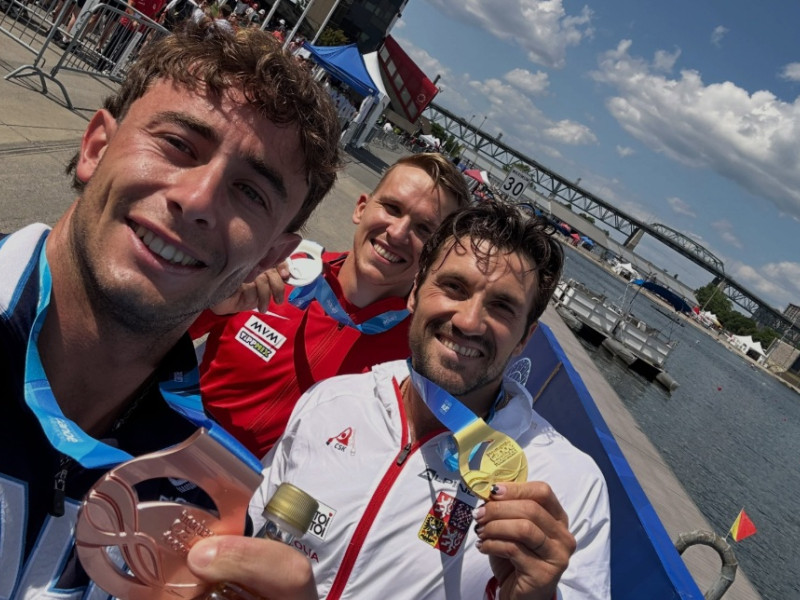
Europe also dominated the men’s C1 1000m, with a complete sweep of the podium. Czechia’s Martin Fuksa, one of the standout names from the 2026 Paddle Europe Sprint Championships in Montemor-o-Velho, confirmed his quality once again by taking gold in 4:09.494. Hungary’s Daniel Fejes finished second, while Italy’s Gabriele Casadei claimed bronze.
Ukraine added another European gold in the women’s C2 500m, with Liudmyla Luzan and Anastasiia Rybachok continuing their excellent 2026 season. After winning European titles together in Montemor-o-Velho, the Ukrainian pair once again showed their strength on the world stage, taking victory ahead of China. Spain’s Angels Moreno and Viktoria Yarchevska added another European medal with bronze.
The women’s K4 500m also brought two more European medals. China took the win, but Spain’s crew of Sara Ouzande, Daniela Garcia, Lucia Val and Barbara Pardo secured silver, while Germany’s Paulina Paszek, Pauline Jagsch, Finja Hermanussen and Nele Reinwardt completed the podium with bronze.
In the women’s K1 1000m, New Zealand’s Aimee Fisher claimed gold, but Europe again placed two athletes on the podium. Hungary’s Zsóka Csikós took silver, while Germany’s Caroline Heuser won bronze.
There was also a European medal in the men’s C1 200m, where Georgia’s Aleksandre Tsivtsivadze finished second behind Brazil’s Gabriel Nascimento. China’s Chenwei Yu took bronze.
The first paracanoe final of the day, the men’s VL1 200m, went to Australia’s Benjamin Sainsbury, ahead of Canada’s Benjamin Brown and India’s Yash Kumar. Although Europe did not reach the podium in this race, more paracanoe finals are still to come in Montreal, with several European athletes expected to fight for medals in the coming days.
After a successful European Championships in Montemor-o-Velho, the Montreal World Cup is another important step in the international season. With the 2026 ICF Canoe Sprint and Paracanoe World Championships in Poznań approaching in August, European athletes are using this event to test their form against the world’s best and continue building momentum towards the main global target of the year.
Sprint + Paracanoe combined
| Rank | Nation | Gold | Silver | Bronze | Total |
|---|---|---|---|---|---|
| 1 | Hungary | 1 | 2 | 0 | 3 |
| 2 | Ukraine | 1 | 0 | 0 | 1 |
| 2 | Czechia | 1 | 0 | 0 | 1 |
| 4 | Spain | 0 | 1 | 1 | 2 |
| 5 | Portugal | 0 | 1 | 0 | 1 |
| 5 | Georgia | 0 | 1 | 0 | 1 |
| 7 | Germany | 0 | 0 | 2 | 2 |
| 8 | Italy | 0 | 0 | 1 | 1 |
European total: 3 gold, 5 silver, 4 bronze — 12 medals
When compared with the same sprint events contested at the first two World Cups of the season, Europe’s performance in Montreal was not below the usual level. In fact, European nations achieved their strongest overall medal return of the three World Cups in these events.


© 2021 ECA